
Because toothpaste gives a brief cooling sensation, the idea took root that it "treats" burns. The truth is the exact opposite.
In short — what to do
- It forms an insulating layer that traps heat inside the skin, so damage continues in the depth.
- It isn't sterile — it raises the risk of wound infection.
- Removing it from burnt skin is painful and can strip damaged tissue.
- It hides the burn's appearance from the doctor, making depth assessment harder.
This topic’s video is coming soon on our channels — follow us
@lahzaem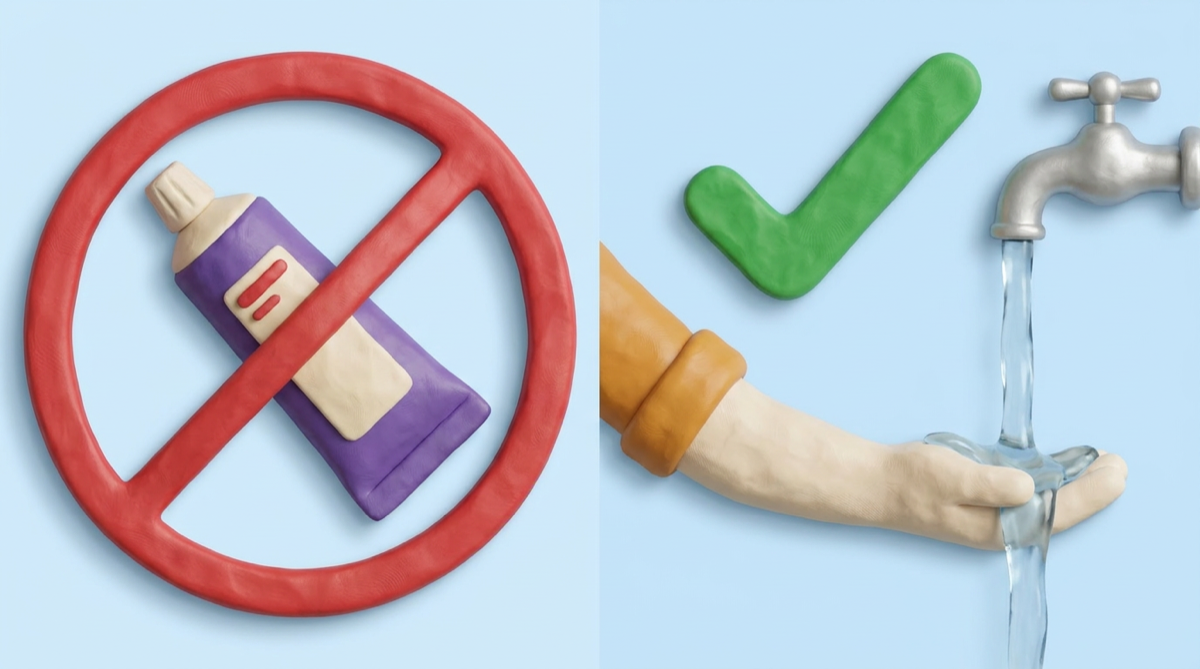
The full details
Why toothpaste harms
- It forms an insulating layer that traps heat inside the skin, so damage continues in the depth.
- It isn't sterile — it raises the risk of wound infection.
- Removing it from burnt skin is painful and can strip damaged tissue.
- It hides the burn's appearance from the doctor, making depth assessment harder.
Its siblings on the myth list
- Butter and oil: they "fry" the skin and add contamination.
- Ice: adds a cold injury on top of the burn.
- Honey, coffee, tahini: contaminate the wound and hinder treatment.
- Popping blisters: opens a door to infection — the blister is a natural dressing.
The only right answer
Cool running water for 20 minutes, then a clean non-stick cover, and simple pain relief if needed. Read the full burns guide for details and when to go to the ER.
Why do these myths spread?
Because most minor burns heal on their own regardless of what was put on them — so the credit wrongly goes to the toothpaste or butter. The burn that gets complicated doesn't tell its story at gatherings.
This content is for general health education only and is not medical advice. Always seek guidance from a qualified healthcare professional. In an emergency, call 998.