Infants have narrow noses and small chests — a simple cold can strain them, the classic example being winter viral bronchiolitis, starting as a snuffle then heaviest on days three and four. Your golden skill: telling true effort from innocent noise.
In short — what to do
- Clear the nose with saline drops and a suction bulb before feeds and sleep — the greatest gift to a snuffly infant.
- Shorter, more frequent feeds, and watch the nappies (wet = hydrated).
- Always sleep on the back, and an absolute smoking ban in the home.
- No cough or cold medicines for infants — unsafe and useless.
This topic’s video is coming soon on our channels — follow us
@lahzaem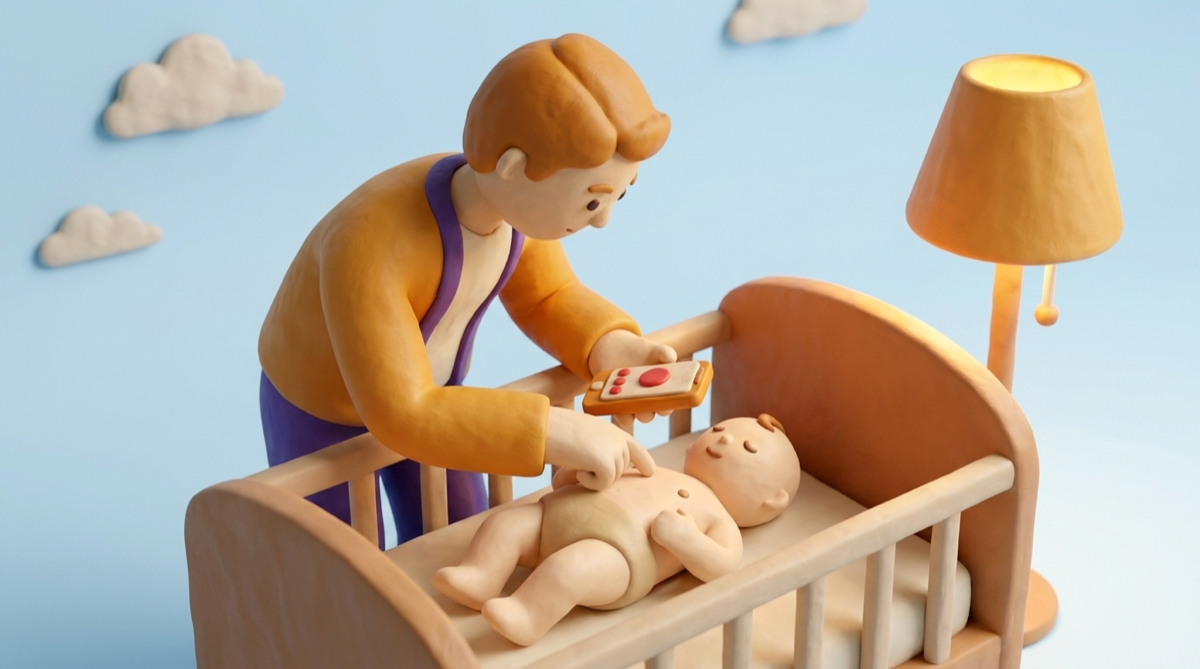
The full details
Read the signs on the body
- Retractions: skin pulling in between ribs, below the breastbone, or above the collarbones with each breath.
- Nostril flaring and grunting with each breath out.
- Very fast breathing that persists (above 60/min in a young infant) — count for 30 seconds while calm.
- Broken feeding: letting go of breast/bottle to catch breath — an early, important effort sign.
- Colour: pallor or blueness around the lips = maximum alarm.
Home care (mild cases)
- Clear the nose with saline drops and a suction bulb before feeds and sleep — the greatest gift to a snuffly infant.
- Shorter, more frequent feeds, and watch the nappies (wet = hydrated).
- Always sleep on the back, and an absolute smoking ban in the home.
- No cough or cold medicines for infants — unsafe and useless.
 ER immediately (998) if
- Any pause in breathing even seconds, or blue lips.
- Clear retractions with grunting, or persistent breathing above 60–70.
- Complete feed refusal or dry nappies, or unusual floppiness.
- An infant under 3 months with fever ≥38° — a fixed rule without exception.
One moment
Film your infant's bare chest with your phone when worried — a 15-second video of the retractions and breathing is worth a thousand descriptions to a doctor's ear, and sometimes settles the decision remotely.
This content is for general health education only and is not medical advice. Always seek guidance from a qualified healthcare professional. In an emergency, call 998.