
A panic attack is a sudden wave of intense fear the body fires without real danger: the heart races, breathing tightens, limbs tremble, and the person feels they are "losing control" or dying. The attack itself does not damage the heart, and it usually peaks within 10 minutes then gradually settles.
In short — what to do
- Name it (to yourself or to them): "This is a panic attack — it passes, it does not kill." Naming it breaks half the fear.
- Breathe slowly: in through the nose for 4 seconds, out longer through the mouth for 6. Repeat for minutes — the long exhale calms the body.
- Ground the senses (5-4-3-2-1): name 5 things you see, 4 you can touch, 3 you hear, 2 you smell, 1 you taste.
- Stay with the person and use short calm sentences — not "calm down!" but "I'm here, this will pass."
- Don't flee the place if you can help it — escaping every place an attack happens teaches the brain to fear it.
This topic’s video is coming soon on our channels — follow us
@lahzaem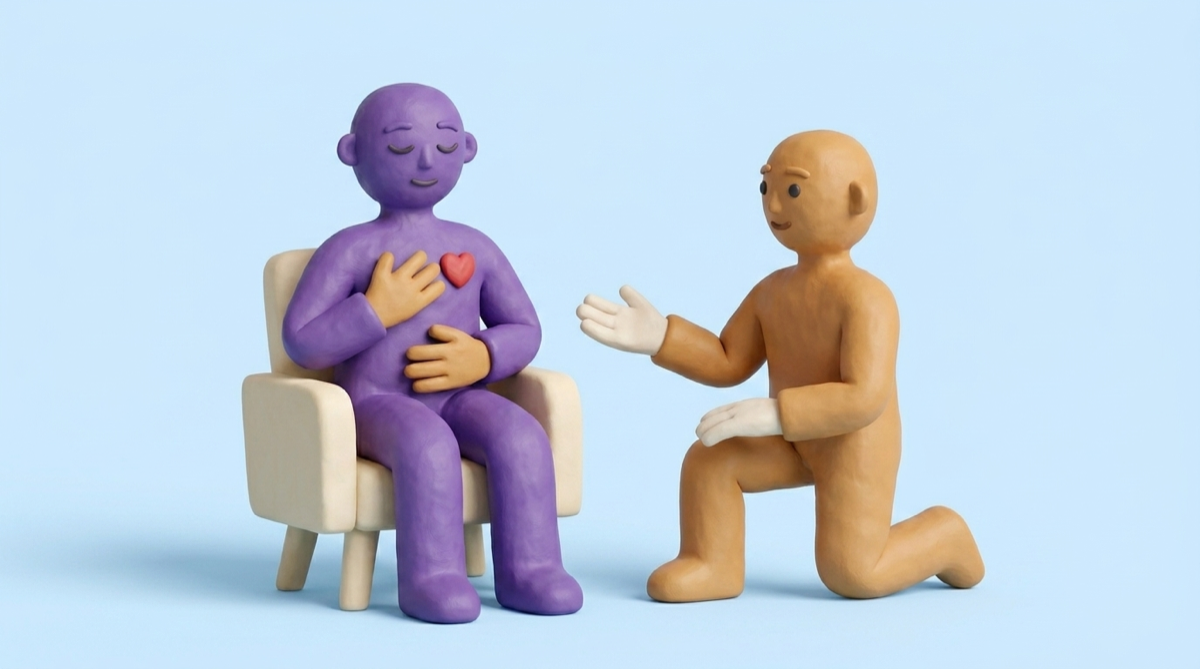
What to do during the attack
- Name it (to yourself or to them): "This is a panic attack — it passes, it does not kill." Naming it breaks half the fear.
- Breathe slowly: in through the nose for 4 seconds, out longer through the mouth for 6. Repeat for minutes — the long exhale calms the body.
- Ground the senses (5-4-3-2-1): name 5 things you see, 4 you can touch, 3 you hear, 2 you smell, 1 you taste.
- Stay with the person and use short calm sentences — not "calm down!" but "I'm here, this will pass."
- Don't flee the place if you can help it — escaping every place an attack happens teaches the brain to fear it.
Panic or heart? When to go to the ER
The symptoms overlap, and the rule is simple: the first time these symptoms ever happen, or with pressing chest pain, or with cardiac risk factors (diabetes, hypertension, smoking, age over forty, family history) — get assessed in the ER. Nobody will blame you: "panic attack" is a diagnosis made after the heart is ruled out, never before.
 Seek urgent care if
- Pressing chest pain, or pain spreading to the arm or jaw, or heavy cold sweating.
- Symptoms do not settle within 20–30 minutes or keep worsening.
- True fainting, slurred speech, or weakness in a limb — these are not panic symptoms.
After it passes
Recurrent panic attacks are highly treatable — CBT and medication when needed are life-changing. See your doctor: recurrence is not "weakness", it is a medical condition with a solution.
This content is for general health education only and is not medical advice. Always seek guidance from a qualified healthcare professional. In an emergency, call 998.