A pneumothorax is air leaking into the space around the lung, collapsing it — partially or completely. It sometimes happens without cause (especially in tall thin young men and smokers), after chest injuries, and in people with lung disease.
In short — what to do
- Go to the ER — any sudden chest pain with breathlessness needs assessment and imaging, even in the young.
- Sit in whatever position is most comfortable — often leaning toward the affected side.
- Avoid exertion, breath-holding, or trying to "crack" the chest.
- 998 immediately if the distress is severe or accelerating — tension pneumothorax kills in minutes and needs instant intervention.
This topic’s video is coming soon on our channels — follow us
@lahzaem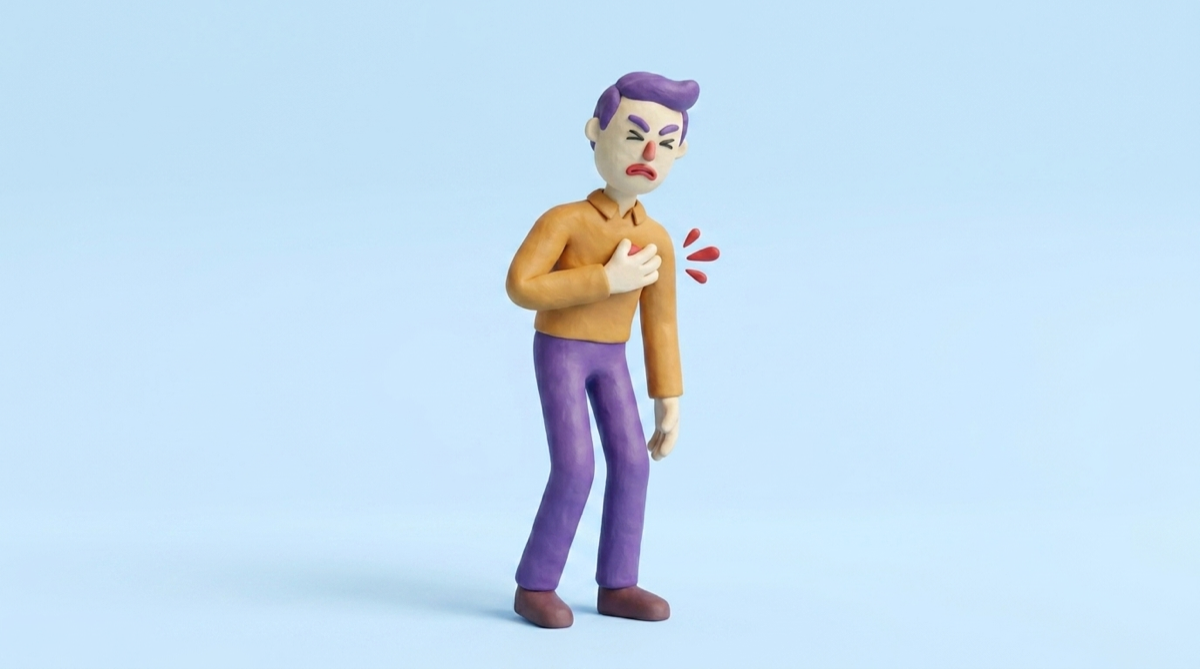
The full details
When to suspect it
- Sudden sharp pain on ONE side of the chest — "like a stab" — worse on breathing in.
- Breathlessness ranging from mild to severe.
- After chest trauma (crash, fall, blow).
- In divers, and occasionally after air travel.
What to do
- Go to the ER — any sudden chest pain with breathlessness needs assessment and imaging, even in the young.
- Sit in whatever position is most comfortable — often leaning toward the affected side.
- Avoid exertion, breath-holding, or trying to "crack" the chest.
- 998 immediately if the distress is severe or accelerating — tension pneumothorax kills in minutes and needs instant intervention.
 Maximum-danger signs (tension pneumothorax)
- Rapidly worsening distress with pallor and sweating.
- Blueness and bulging neck veins.
- Severe dizziness or imminent collapse — 998 now.
If it happened to you before
One spontaneous pneumothorax raises the odds of another: see a chest physician about diving, flying and smoking — and take any similar pain later seriously, immediately.
This content is for general health education only and is not medical advice. Always seek guidance from a qualified healthcare professional. In an emergency, call 998.