
Inside your spine runs the spinal cord — the body's main nerve cable. When a vertebra breaks, the broken bone becomes a blade next to the cord: a wrong movement after the injury can complete the cut the accident started.
In short — what to do
- Tell the person: "don't move" calmly and firmly — many casualties try to get up from the shock.
- Stabilise the head with your hands: kneel behind their head and hold both sides of the head steadily, in the position you found it, until the ambulance arrives.
- Call 998 (or point at a specific person and tell them to call).
- Keep them warm and reassured — cover with a blanket if available and keep talking to them.
- The only two exceptions for moving: immediate danger (fire, highway) — or stopped breathing, because CPR outranks everything.
This topic’s video is coming soon on our channels — follow us
@lahzaem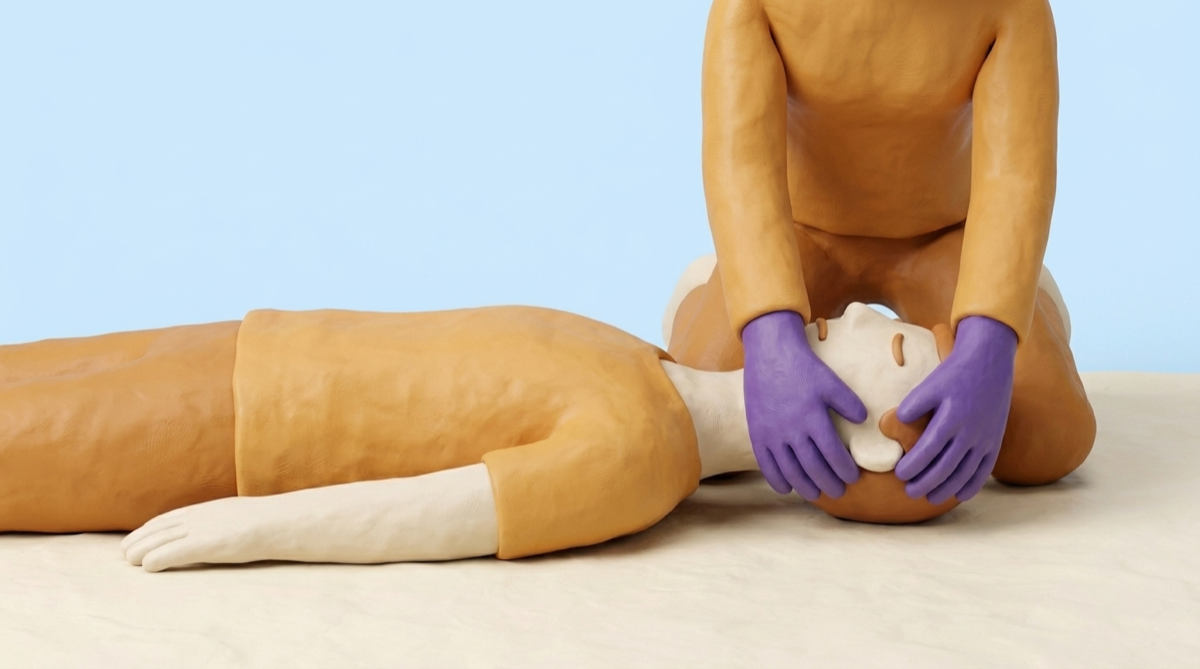
The full details
When do I suspect a spine injury?
- A car or motorcycle crash, or a pedestrian hit.
- A fall from height (ladder, roof, horse/camel).
- A dive into shallow water.
- Neck or back pain after an injury, or numbness/weakness in the limbs.
- Anyone unconscious after a significant accident — treated as a spine injury until proven otherwise.
What do I do?
- Tell the person: "don't move" calmly and firmly — many casualties try to get up from the shock.
- Stabilise the head with your hands: kneel behind their head and hold both sides of the head steadily, in the position you found it, until the ambulance arrives.
- Call 998 (or point at a specific person and tell them to call).
- Keep them warm and reassured — cover with a blanket if available and keep talking to them.
- The only two exceptions for moving: immediate danger (fire, highway) — or stopped breathing, because CPR outranks everything.
 Absolutely forbidden
- Sitting the casualty up or leaning them against a wall.
- Driving them in a private car "faster than the ambulance" — the ambulance transports them immobilised; your car cannot.
- Bending the neck or putting a pillow under the head.
- Dragging them by the arms or legs without a true danger.
Remember
The best first-aider for a spine injury is the one who almost "does nothing": two steady hands on the head, a reassuring voice, and an ambulance call. Here, heroism is restraint.
This content is for general health education only and is not medical advice. Always seek guidance from a qualified healthcare professional. In an emergency, call 998.