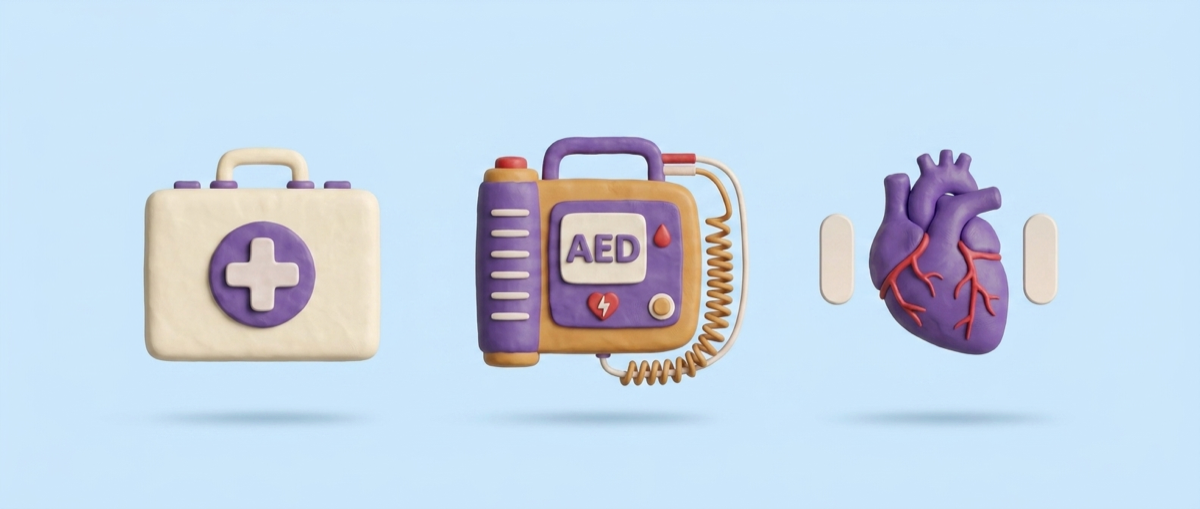
In sudden cardiac arrest, the chance of survival drops by about 10% for every minute without CPR. Hands-only chest compressions are a simple technique anyone can learn — and they can double or triple the chance of survival.
In short — what to do
- Make sure the scene is safe before approaching the patient.
- Check for responsiveness and normal breathing: unresponsive and not breathing normally, or only gasping? Start CPR immediately.
- Call 998, place the phone on speaker, and follow the dispatcher's instructions — ask someone nearby to bring an AED, if available.
- Place the heel of one hand in the centre of the chest (lower half of the breastbone), your other hand on top, fingers interlocked.
- Push hard and fast: 5–6 cm deep, at 100–120 compressions per minute — the beat of a fast, steady song.
- Allow the chest to fully recoil after each compression, and minimise interruptions.
- Continue without stopping until the ambulance arrives, an AED is ready to use, the person shows signs of life, or you are physically unable to continue.
This topic’s video is coming soon on our channels — follow us
@lahzaem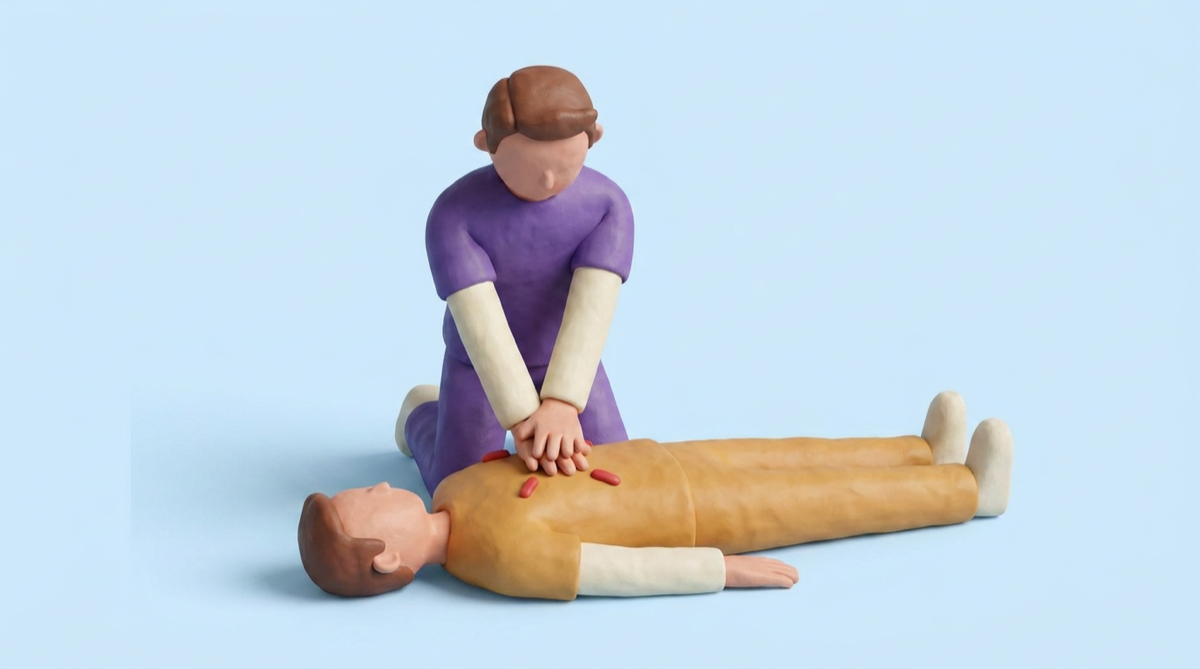
When do I start CPR?
- The person does not respond when you call them and gently shake their shoulders.
- They are not breathing at all, or only gasping abnormally (agonal breathing).
- If both are true: start immediately — do not wait.
The steps — hands only
- Make sure the scene is safe before approaching the patient.
- Check for responsiveness and normal breathing: unresponsive and not breathing normally, or only gasping? Start CPR immediately.
- Call 998, place the phone on speaker, and follow the dispatcher's instructions — ask someone nearby to bring an AED, if available.
- Place the heel of one hand in the centre of the chest (lower half of the breastbone), your other hand on top, fingers interlocked.
- Push hard and fast: 5–6 cm deep, at 100–120 compressions per minute — the beat of a fast, steady song.
- Allow the chest to fully recoil after each compression, and minimise interruptions.
- Continue without stopping until the ambulance arrives, an AED is ready to use, the person shows signs of life, or you are physically unable to continue.
The AED (automated defibrillator)
If an AED is available nearby (malls, airports, gyms), send someone to fetch it immediately. It speaks its instructions step by step and cannot "harm" the patient — it only delivers a shock when one is needed.
 Common mistakes that cost lives
- Pressing slowly or gently for fear of hurting the patient — strong compressions are what save them.
- Stopping repeatedly to check breathing or pulse.
- Waiting for the ambulance without doing anything.
One moment
A broken rib heals… a stopped heart without CPR spares no one. Push hard and don't be afraid.
This content is for general health education only and is not medical advice. Always seek guidance from a qualified healthcare professional. In an emergency, call 998.