
The question ER staff hear most: "I arrived before him, why did he go in first?". The answer is called triage — a global system that orders patients by how dangerous their condition is, not by arrival time.
In short — what to do
- On arrival, a triage nurse assesses you: vital signs, complaint, and danger indicators.
- Your case is graded on a five-level scale: from "immediate resuscitation" to "non-urgent".
- Life-threatening cases go straight in, even if they arrived last.
- While you wait, you're reassessed — and if your condition changes, tell the triage nurse immediately.
This topic’s video is coming soon on our channels — follow us
@lahzaem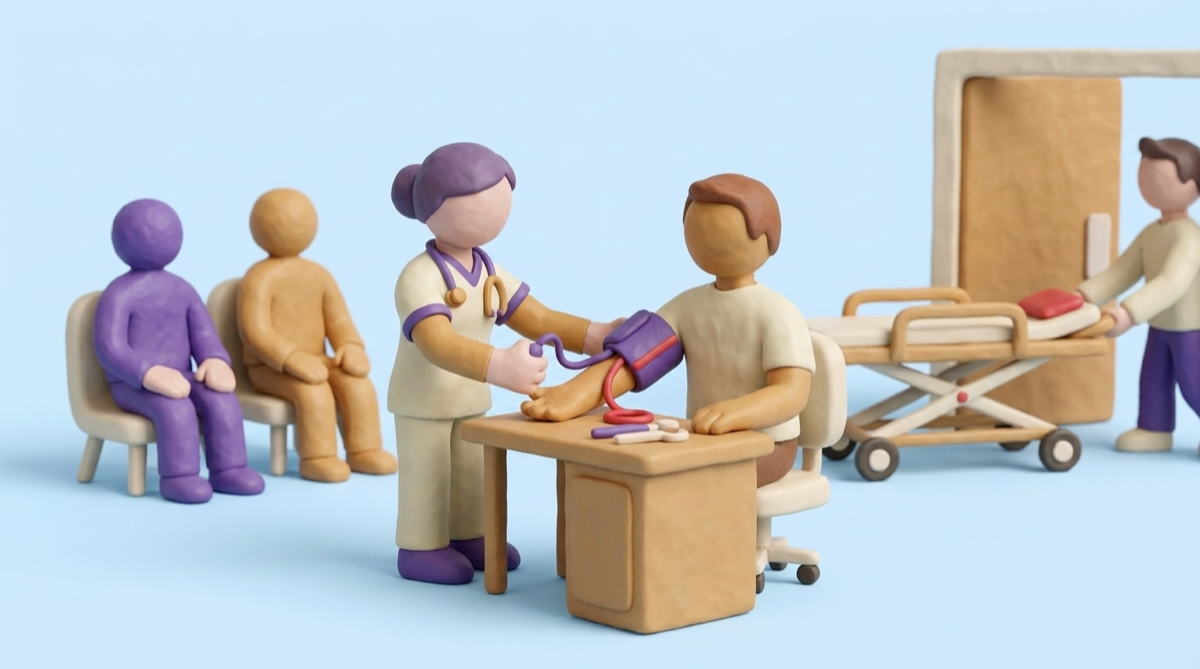
The full details
How triage works
- On arrival, a triage nurse assesses you: vital signs, complaint, and danger indicators.
- Your case is graded on a five-level scale: from "immediate resuscitation" to "non-urgent".
- Life-threatening cases go straight in, even if they arrived last.
- While you wait, you're reassessed — and if your condition changes, tell the triage nurse immediately.
What does your wait mean?
Usually that your initial assessment is reassuring — and that's good news. The patient who is rushed straight in wishes they were in your seat.
How to make your visit faster and more accurate
- Bring your medicines list, or photos of them on your phone.
- Mention your allergies and chronic conditions from the start.
- Describe symptoms precisely: when did they start? What makes them better or worse?
- Tell the nurse immediately if your pain worsens or new symptoms appear while waiting.
Worth knowing
The doctor "walking calmly" through the department isn't free — they're usually managing several critical cases behind the curtains at that very moment.
This content is for general health education only and is not medical advice. Always seek guidance from a qualified healthcare professional. In an emergency, call 998.