
The human body is an excellent conductor — whoever touches a person still connected to current gets shocked exactly like them. And household current may seem "minor" but can disturb the heart's rhythm hours after a shock that seemed trivial.
In short — what to do
- Cut the power first: the main breaker or unplug — never touch the person before that.
- Can't cut it? Push the wire away with a dry insulator: wooden stick, plastic broom, you standing on dry ground — nothing metal, nothing wet.
- Call 998 on speaker.
- Unresponsive and not breathing? Start CPR immediately and send for an AED — the shocked heart responds excellently to therapeutic defibrillation.
- Breathing? Recovery position; cover entry and exit burns with clean dry gauze (no water on electrical burns, no creams).
- High voltage (poles, stations): stay at least 10 metres away and call — zero heroics with high voltage.
This topic’s video is coming soon on our channels — follow us
@lahzaem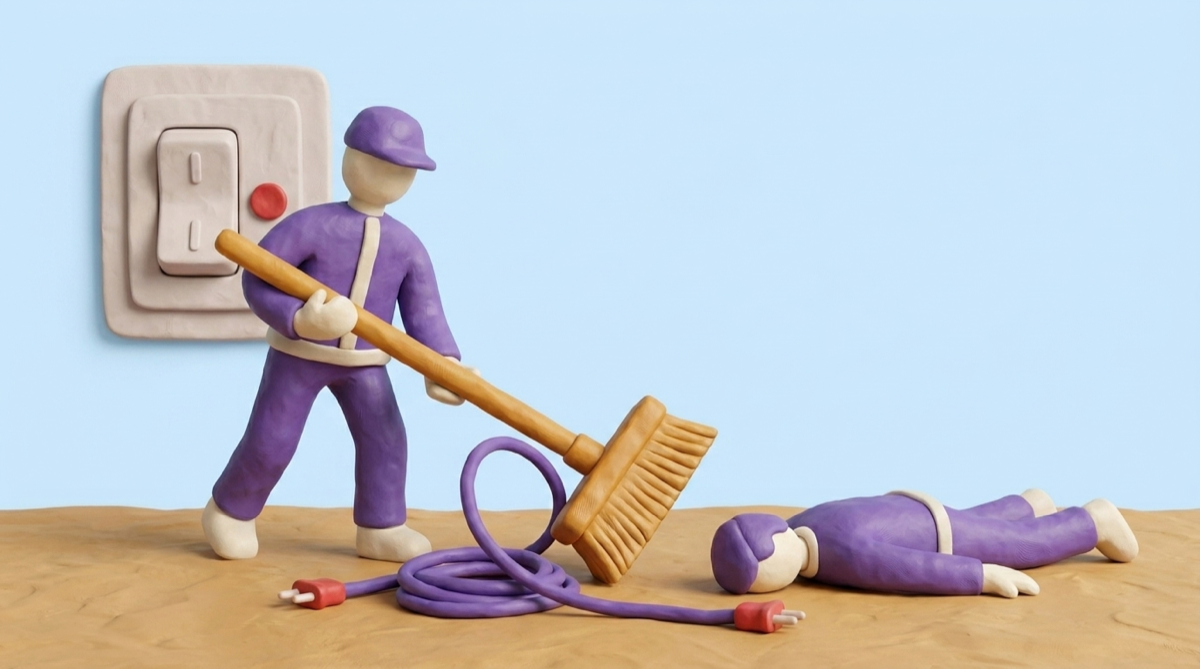
The full details
The steps
- Cut the power first: the main breaker or unplug — never touch the person before that.
- Can't cut it? Push the wire away with a dry insulator: wooden stick, plastic broom, you standing on dry ground — nothing metal, nothing wet.
- Call 998 on speaker.
- Unresponsive and not breathing? Start CPR immediately and send for an AED — the shocked heart responds excellently to therapeutic defibrillation.
- Breathing? Recovery position; cover entry and exit burns with clean dry gauze (no water on electrical burns, no creams).
- High voltage (poles, stations): stay at least 10 metres away and call — zero heroics with high voltage.
 Every shocked person needs medical assessment if
- They lost consciousness even for seconds, had rhythm disturbance, or persistent numbness/tingling.
- Visible burns (usually entry and exit points — internal damage exceeds the visible).
- Shock during pregnancy, from a wet source (bathroom, pool), or strong industrial current.
- Children who bit a cable or poked something into a socket — even if they seem fine.
Home prevention
Socket covers for children, no electrical devices near water, no repairs with the current live — and ground-fault breakers (GFCI) in bathrooms and kitchen are a friend worth asking your electrician about.
This content is for general health education only and is not medical advice. Always seek guidance from a qualified healthcare professional. In an emergency, call 998.