Most childhood fevers are caused by simple viral infections that pass safely. The parents' role: keep the child comfortable, and watch for the red flags that need the ER.
In short — what to do
- Give plenty of fluids (water, milk, more frequent feeds for infants).
- A fever reducer (paracetamol, or ibuprofen for those over 6 months) dosed by your child's weight — ask the pharmacist for the correct dose for their weight.
- Light clothing and a moderate room — don't pile on blankets.
- Watch their activity when the fever comes down: a child who plays and drinks after medicine is a reassuring sign.
This topic’s video is coming soon on our channels — follow us
@lahzaem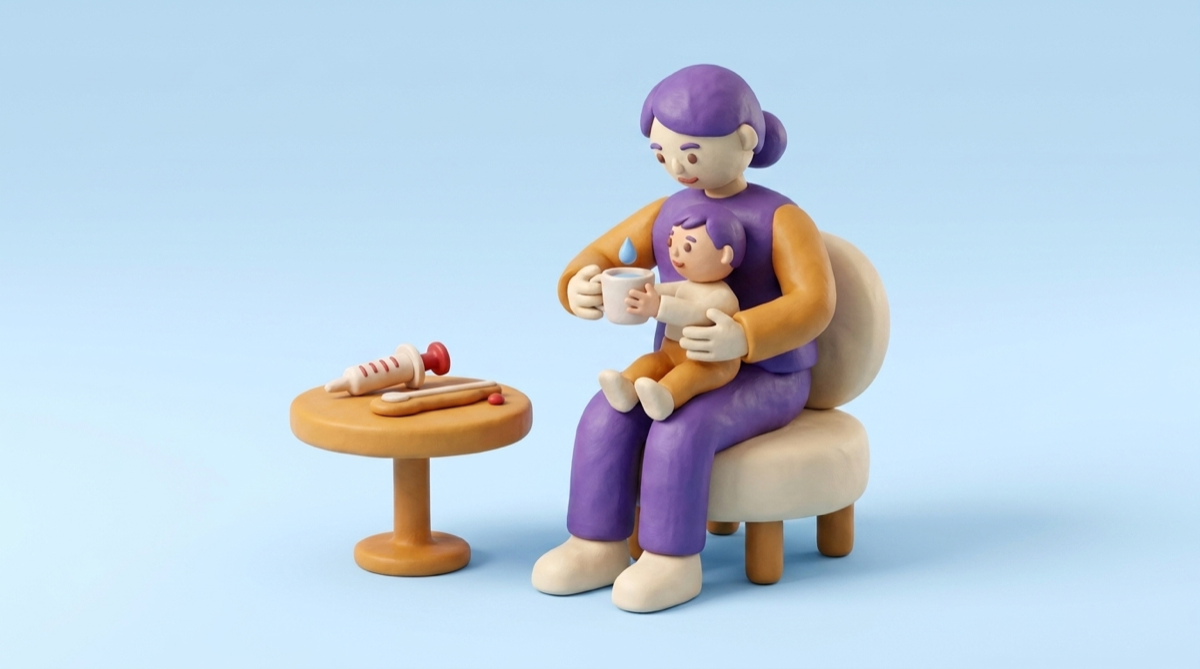
The full details
Care at home
- Give plenty of fluids (water, milk, more frequent feeds for infants).
- A fever reducer (paracetamol, or ibuprofen for those over 6 months) dosed by your child's weight — ask the pharmacist for the correct dose for their weight.
- Light clothing and a moderate room — don't pile on blankets.
- Watch their activity when the fever comes down: a child who plays and drinks after medicine is a reassuring sign.
Go to the ER immediately if
- Younger than 3 months with a temperature of 38°C or more — no exceptions.
- A seizure occurred (involuntary shaking with loss of awareness).
- A rash that doesn't fade when pressed with a glass.
- Severe drowsiness: hard to wake, no smile, no interaction even after the fever drops.
- Difficulty breathing, bluish lips, or a stiff neck.
- Signs of dehydration: dry diaper for many hours, crying without tears, dry mouth.
 Common mistakes
- Cooling with alcohol or ice water — dangerous and useless; lukewarm water is acceptable for comfort only.
- Aspirin for children — absolutely forbidden (risk of Reye's syndrome).
- Waking the child every hour to measure temperature — restful sleep is part of recovery.
- Antibiotics from the pharmacy without a prescription — most fevers are viral and antibiotics don't help.
About febrile seizures
Terrifying for parents but usually benign and brief. During one: place the child on their side away from hard objects, put nothing in their mouth, and time it. Any first-time seizure needs ER assessment.
This content is for general health education only and is not medical advice. Always seek guidance from a qualified healthcare professional. In an emergency, call 998.