As core temperature falls the body shivers, then — the most dangerous stage — shivering stops and confusion, drowsiness and odd behaviour appear. The golden first-aid rule: rewarming is gradual and gentle, because a cold body is as fragile as glass.
In short — what to do
- Move them somewhere warm and dry and change wet clothes immediately — wetness steals heat many times faster.
- Wrap in blankets including the head (a major heat-loss site), with insulation between them and the ground.
- A warm sweet drink if fully awake and swallowing safely — no alcohol, no caffeine.
- Gradual warming: body-to-body warmth or warm (not hot) packs on the chest, neck and armpits — not on the limbs.
- Handle very gently and minimise movement — the cold heart is irritable, and rough movement can trigger a dangerous rhythm.
- 998 immediately if shivering stops or confusion or drowsiness appears.
This topic’s video is coming soon on our channels — follow us
@lahzaem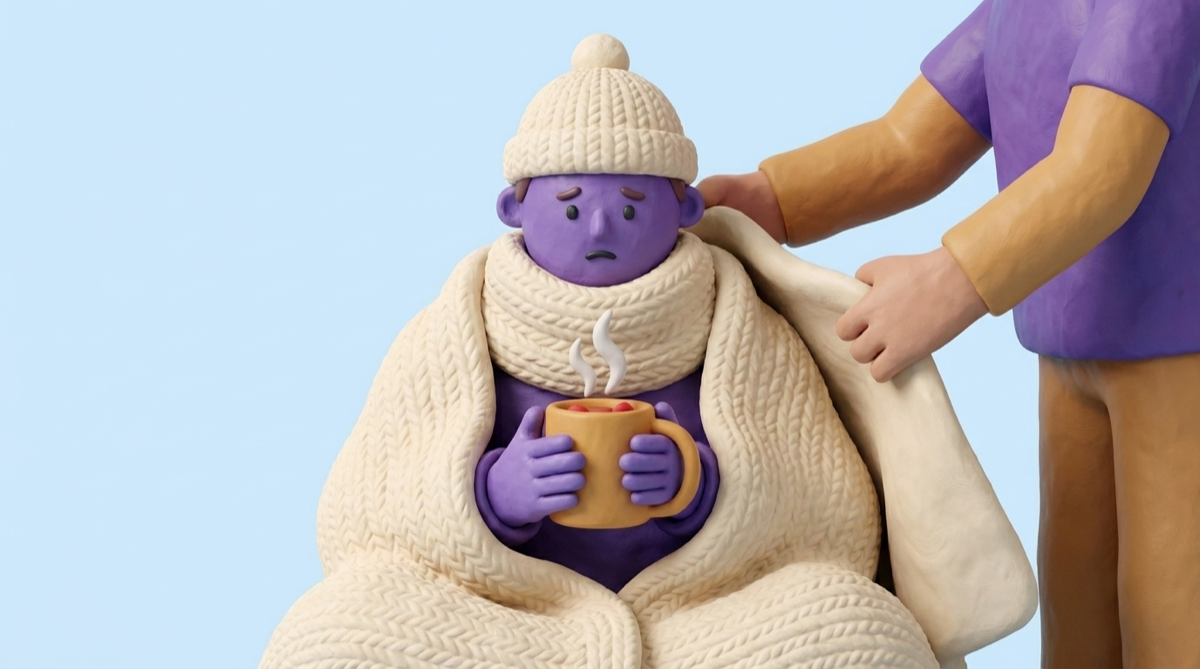
The full details
What to do
- Move them somewhere warm and dry and change wet clothes immediately — wetness steals heat many times faster.
- Wrap in blankets including the head (a major heat-loss site), with insulation between them and the ground.
- A warm sweet drink if fully awake and swallowing safely — no alcohol, no caffeine.
- Gradual warming: body-to-body warmth or warm (not hot) packs on the chest, neck and armpits — not on the limbs.
- Handle very gently and minimise movement — the cold heart is irritable, and rough movement can trigger a dangerous rhythm.
- 998 immediately if shivering stops or confusion or drowsiness appears.
 Important prohibitions
- No hot water or direct heaters on skin — they can cause burns and thermal shock.
- No limb massage "to boost circulation" — it pushes cold blood to the core.
- Absolutely no alcohol — it dilates vessels and accelerates heat loss.
- A very cold unconscious person can look dead and not be — start CPR if not breathing and continue until the team arrives: "nobody is dead until warm and dead".
One moment
The most dangerous moment in hypothermia is when the person says "I feel better" and stops shivering while getting colder — that false improvement is an escalation alarm, not reassurance.
This content is for general health education only and is not medical advice. Always seek guidance from a qualified healthcare professional. In an emergency, call 998.