
The word "dizzy" describes different things: light-headedness near fainting, or true "vertigo" where the world spins. Most vertigo comes from the inner ear (like benign positional vertigo triggered by head turns) — a minority comes from the brain, and that's what must not be missed.
In short — what to do
- Sit or lie down immediately — the fall is more dangerous than the dizziness. Hold something stable and go down calmly.
- Don't drive or climb ladders until it fully resolves.
- Move slowly afterwards: lying to sitting to standing, in stages.
- Drink water, and eat if you've gone long without food.
- Recurrent positional vertigo? See the doctor — simple clinic manoeuvres treat its commonest type (BPPV) within minutes.
This topic’s video is coming soon on our channels — follow us
@lahzaem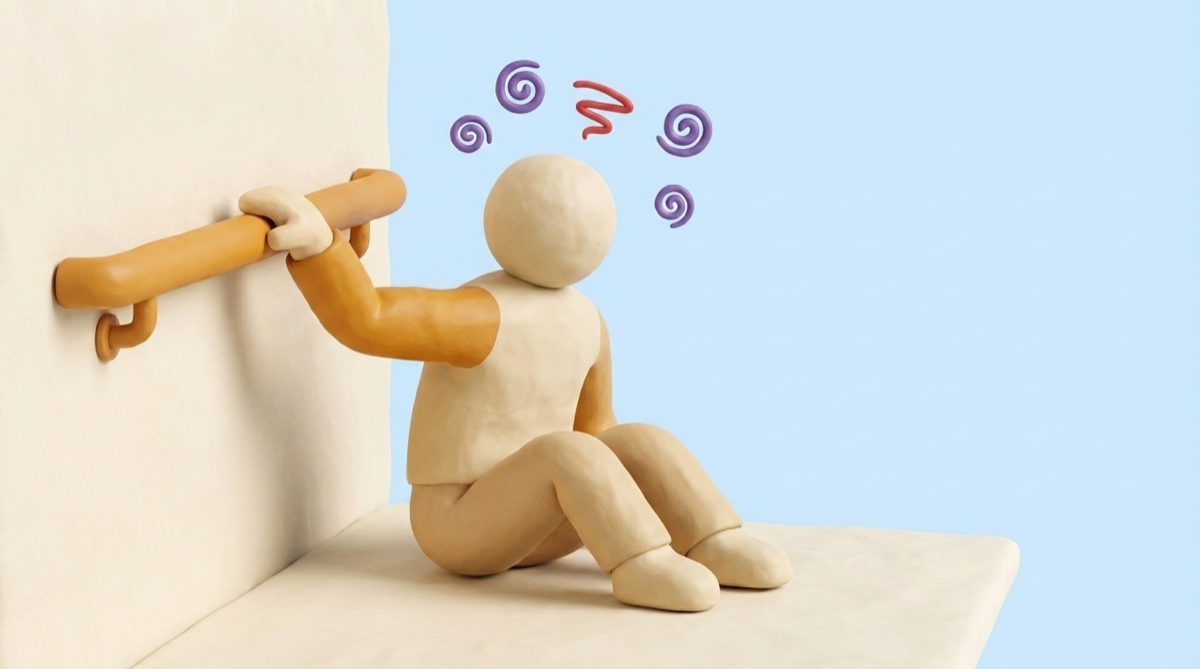
The full details
At the moment of dizziness
- Sit or lie down immediately — the fall is more dangerous than the dizziness. Hold something stable and go down calmly.
- Don't drive or climb ladders until it fully resolves.
- Move slowly afterwards: lying to sitting to standing, in stages.
- Drink water, and eat if you've gone long without food.
- Recurrent positional vertigo? See the doctor — simple clinic manoeuvres treat its commonest type (BPPV) within minutes.
 Vertigo + ANY of these = ER immediately
- Weakness or numbness in a limb or the face, or disturbed speech or swallowing.
- Double vision, or complete inability to walk even after long sitting.
- A violent sudden headache with the vertigo.
- Onset after head injury, or with chest pain and palpitations.
One moment
The brain rule: vertigo alone is usually safe — vertigo with "siblings" (weakness, speech trouble, double vision, severe imbalance) means a brain problem until proven otherwise. The siblings are the verdict.
This content is for general health education only and is not medical advice. Always seek guidance from a qualified healthcare professional. In an emergency, call 998.