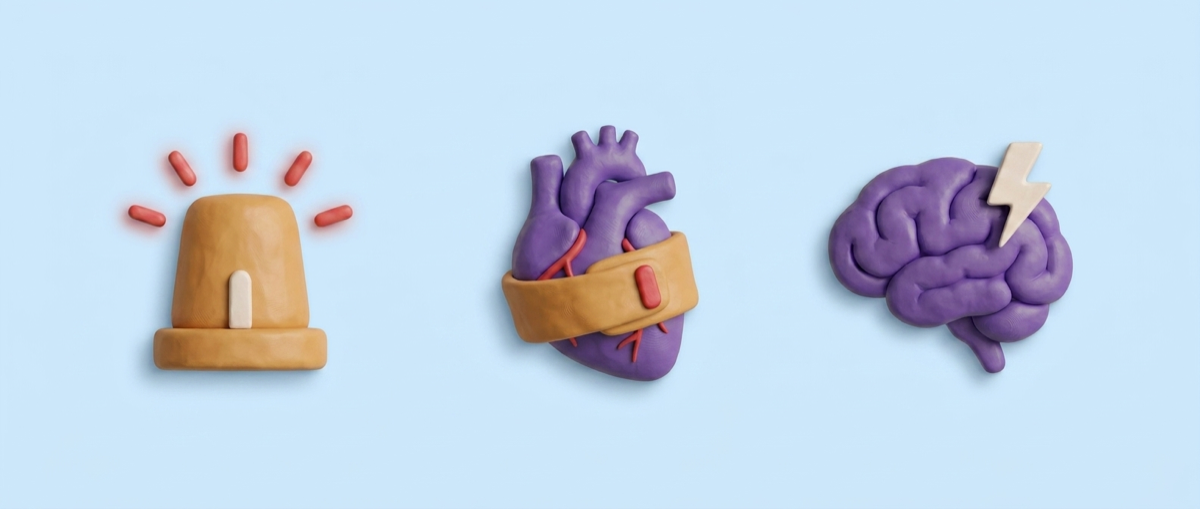
Palpitations are the awareness of your heartbeat: fast, forceful, or irregular. Most are benign (caffeine, poor sleep, stress, fever) — a few are the symptom of a rhythm disorder needing diagnosis. The distinction lives in the company they keep.
In short — what to do
- Sit, calm down, breathe slowly.
- If your doctor taught you a vagal manoeuvre (like forceful coughing or bearing down), use it — never improvise ones you weren't taught.
- Feel your pulse or record it (smartwatch/phone) — capturing the episode is a diagnostic treasure for your doctor.
- It stopped on its own and you feel fine? Book an appointment and bring your recording.
This topic’s video is coming soon on our channels — follow us
@lahzaem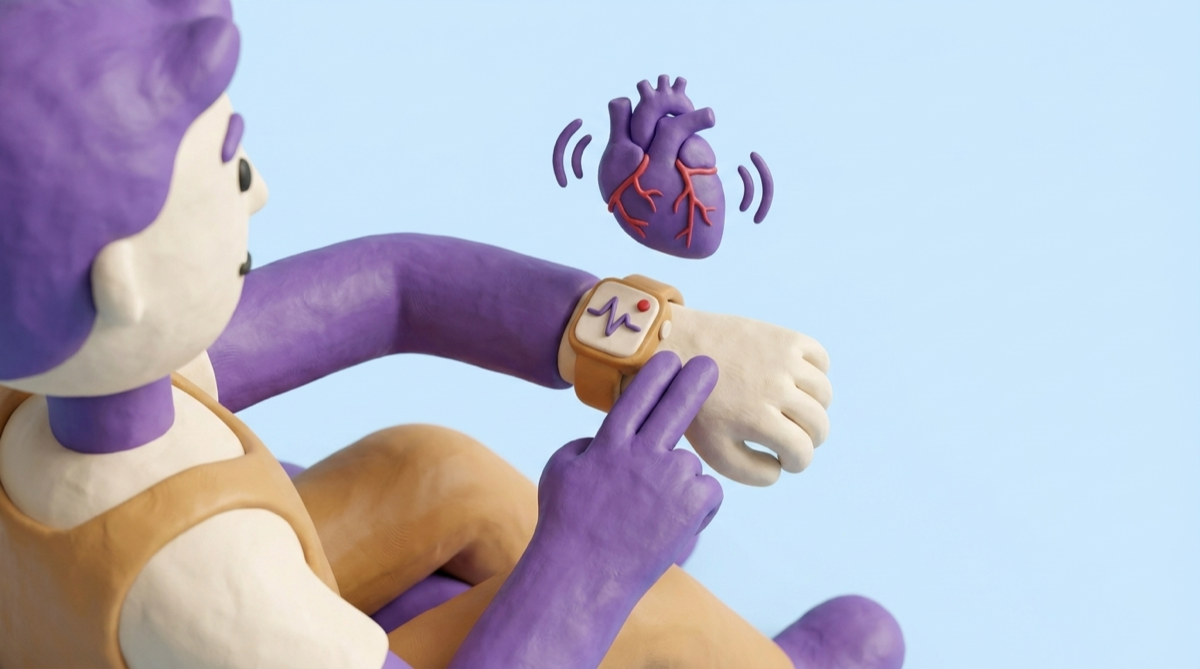
The full details
Usually benign
- After caffeine, energy drinks, or smoking.
- With stress, sleep deprivation, or fever.
- Occasional "skipped" beats then normal rhythm — common in the healthy.
Worth assessment
- Episodes that start and stop abruptly like a switch, or extreme speed at rest.
- Totally irregular "quivering" palpitations — especially over sixty: may be atrial fibrillation, which raises stroke risk.
- Palpitations on exertion, or in anyone with known heart disease or a family history of early sudden death.
During an episode
- Sit, calm down, breathe slowly.
- If your doctor taught you a vagal manoeuvre (like forceful coughing or bearing down), use it — never improvise ones you weren't taught.
- Feel your pulse or record it (smartwatch/phone) — capturing the episode is a diagnostic treasure for your doctor.
- It stopped on its own and you feel fine? Book an appointment and bring your recording.
 998 or the ER immediately if palpitations come with
- Chest pain or breathlessness.
- Fainting or near-fainting.
- Severe dizziness or cold sweat.
- Extreme speed continuing beyond 20–30 minutes without stopping.
One moment
The best gift you can give your doctor: a recording of the episode as it happens — a felt pulse, a smartwatch trace, a wrist ECG. Palpitation diagnosis lives on "catching it in the act".
This content is for general health education only and is not medical advice. Always seek guidance from a qualified healthcare professional. In an emergency, call 998.