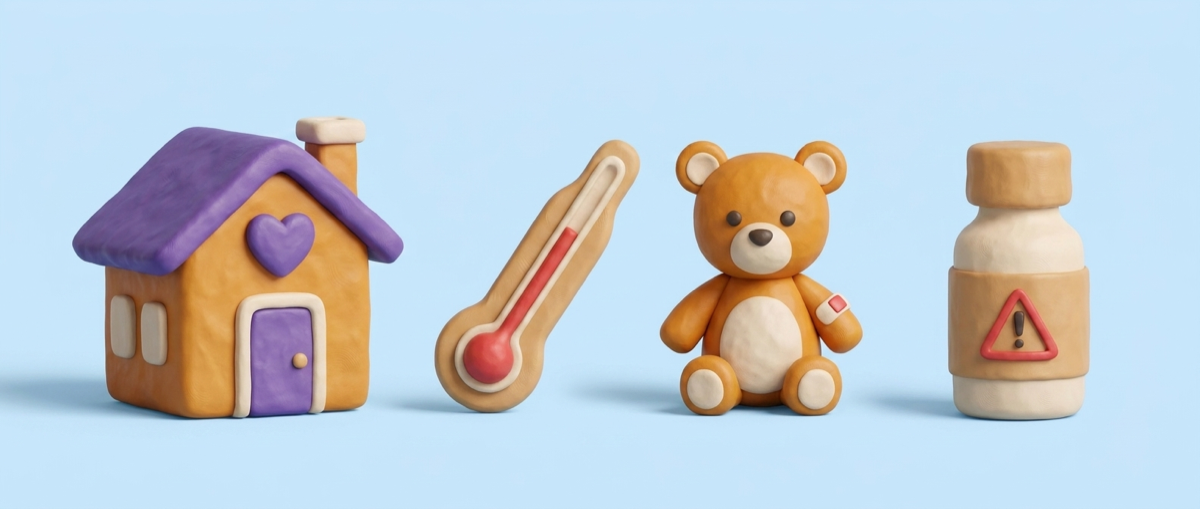
Febrile seizures affect about 1 in 25 children between 6 months and 5 years, with a rapid rise in temperature. It looks terrifying, but in its simple form it doesn't damage the brain and doesn't mean epilepsy.
In short — what to do
- Place the child on their side on a safe surface, and clear hard objects away.
- Put nothing in their mouth — no spoon, no finger, no water.
- Don't restrain them to stop the shaking — just protect the head.
- Look at the clock and time it — the most important fact you'll be asked.
- When it stops: recovery position, and calm reassurance as they wake confused.
This topic’s video is coming soon on our channels — follow us
@lahzaem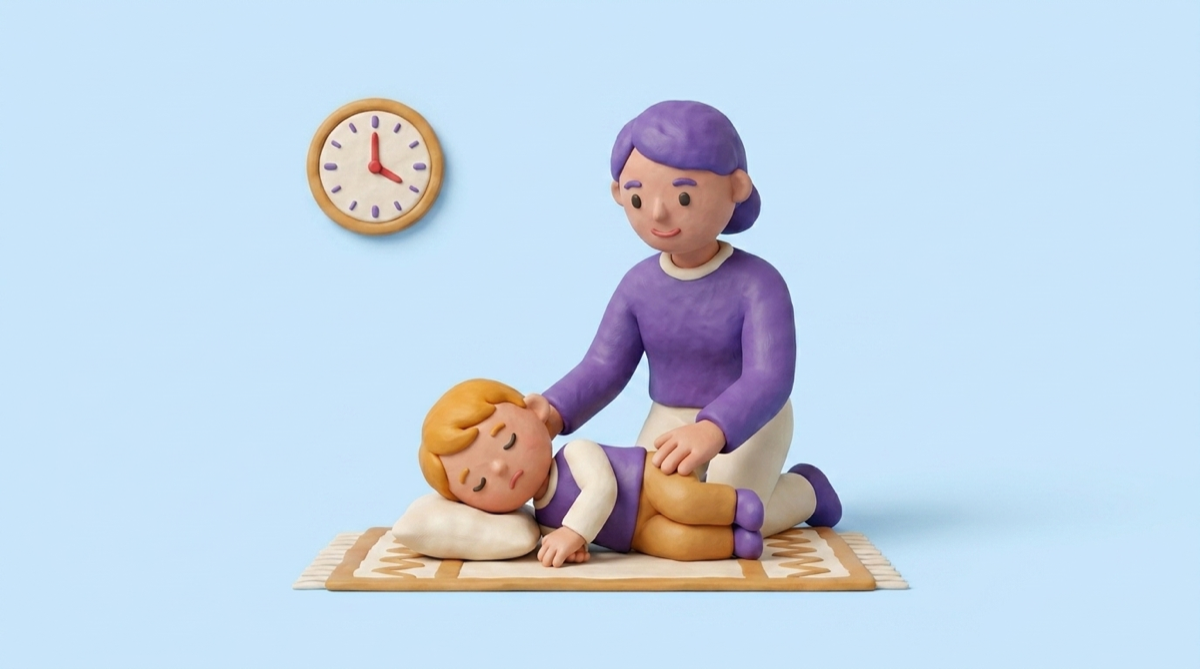
The full details
During the seizure
- Place the child on their side on a safe surface, and clear hard objects away.
- Put nothing in their mouth — no spoon, no finger, no water.
- Don't restrain them to stop the shaking — just protect the head.
- Look at the clock and time it — the most important fact you'll be asked.
- When it stops: recovery position, and calm reassurance as they wake confused.
When is it an emergency?
- The first seizure of their life → always assessed in the ER.
- Longer than 5 minutes → call 998 immediately.
- It repeats the same day, or the shaking is one-sided only.
- They don't regain normal awareness, or fever red flags appear (a non-fading rash, stiff neck, severe drowsiness).
 Myths that harm
- A spoon in the mouth "so they don't swallow their tongue" — swallowing the tongue is anatomically impossible; the spoon breaks teeth and blocks breathing.
- Splashing cold water or alcohol on the body.
- Forcefully restraining the child until they "calm down".
Be reassured
Fever medicine does not prevent febrile seizures — so don't blame yourself for "being late with the dose". Most children outgrow them completely after age five.
This content is for general health education only and is not medical advice. Always seek guidance from a qualified healthcare professional. In an emergency, call 998.