
A pulmonary embolism happens when a clot (usually from the deep leg veins) breaks off and blocks an artery in the lung. Long sitting, recent surgery, pregnancy and some hormonal medicines raise the risk — and speed of diagnosis makes all the difference.
In short — what to do
- This is an emergency: call 998 or go to the ER now — don't wait for it to "pass".
- Sit and avoid exertion — heavy movement doesn't help now.
- NEVER massage the swollen leg — massage can push more clot toward the lung.
- Tell the team your risk factors: travel, surgery, pregnancy, hormonal medicines, previous clots, or cancer — this information shortcuts the diagnosis.
This topic’s video is coming soon on our channels — follow us
@lahzaem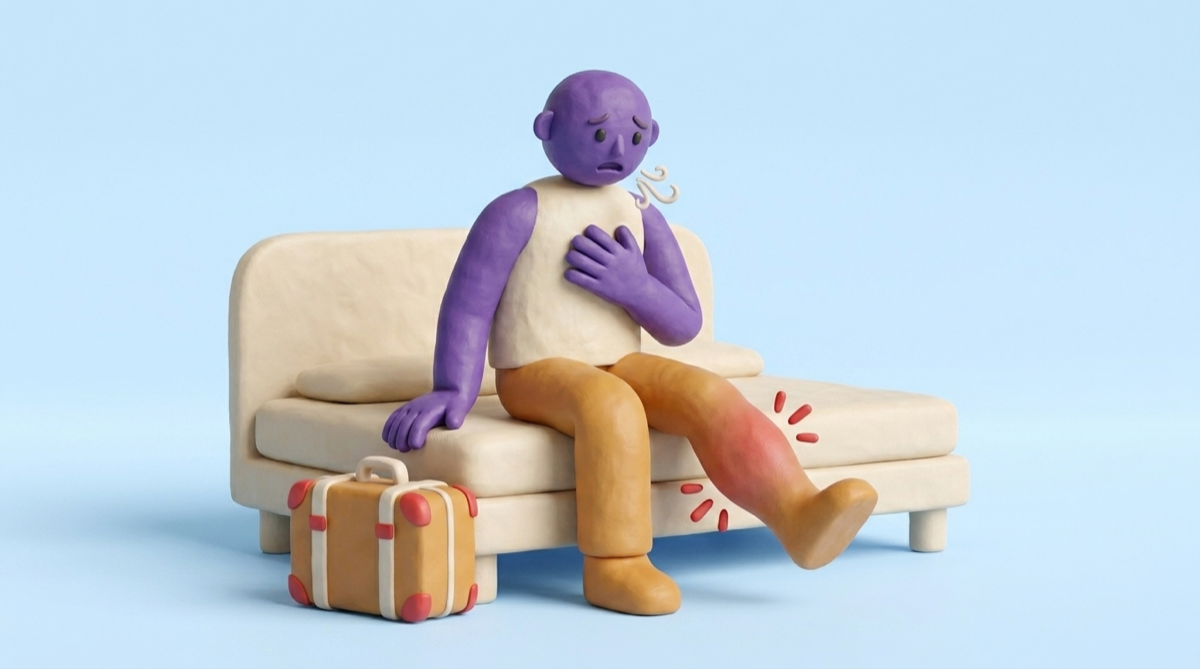
The full details
When to suspect it
- Sudden breathlessness with no clear cause — especially after a long journey, surgery, or bed rest.
- Chest pain that worsens with a deep breath.
- Palpitations, dizziness, or fainting.
- Sometimes coughing blood.
- One swollen, painful, warm leg — the mother clot is often there.
What to do
- This is an emergency: call 998 or go to the ER now — don't wait for it to "pass".
- Sit and avoid exertion — heavy movement doesn't help now.
- NEVER massage the swollen leg — massage can push more clot toward the lung.
- Tell the team your risk factors: travel, surgery, pregnancy, hormonal medicines, previous clots, or cancer — this information shortcuts the diagnosis.
 Prevention in travel and surgery
- On long journeys: move every hour, pump your ankles while seated, drink water.
- Higher-risk people: ask the doctor about compression stockings or preventive injections before travel and surgery.
- After any surgery: early walking as your team directs is your first shield.
One moment
A swollen leg after a trip + sudden breathlessness = don't think twice. PE is one of those conditions where "over-caution" is exactly the medically correct behaviour.
This content is for general health education only and is not medical advice. Always seek guidance from a qualified healthcare professional. In an emergency, call 998.