
Most small household cuts heal with cleaning and a plaster. Stitches aren't just cosmetic: they close deep wounds, stop bleeding, and reduce infection — but most wounds must be sutured within 4–6 hours before closing them becomes risky.
In short — what to do
- Press with clean gauze until bleeding stops (10 minutes of continuous pressure without lifting).
- Wash generously under clean running water — good washing beats any antiseptic.
- Cover with a clean dressing, change daily, and watch for infection signs.
- Don't blow on the wound or apply coffee, turmeric or toothpaste — myths that plant infection.
This topic’s video is coming soon on our channels — follow us
@lahzaem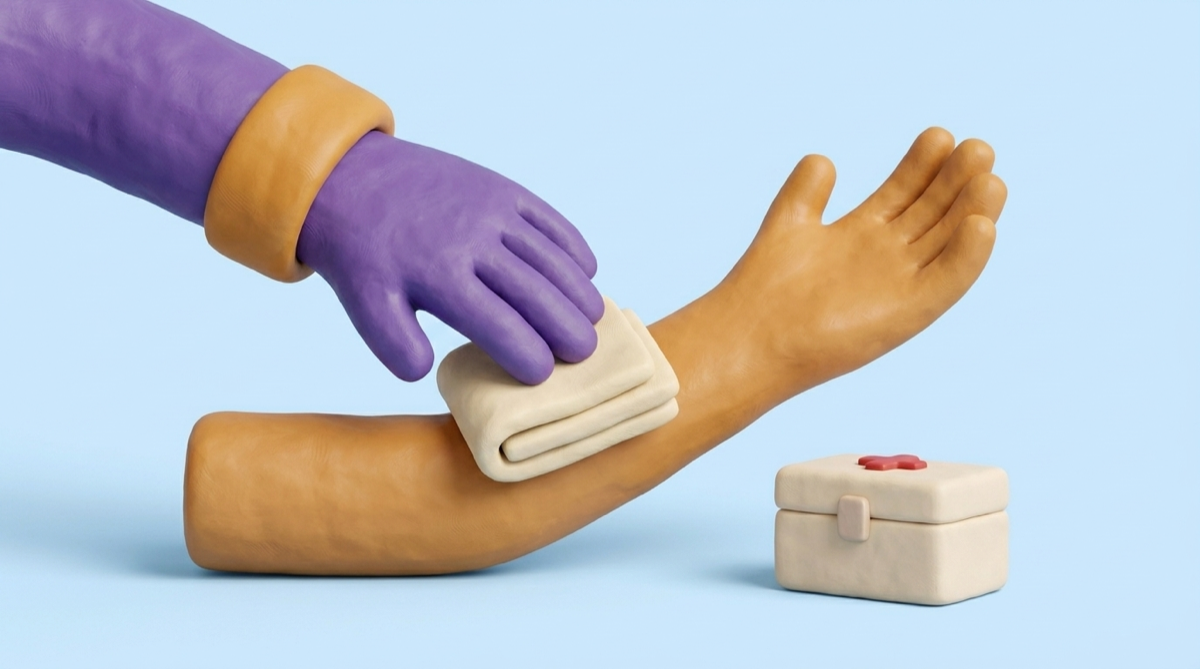
The full details
Home care for the simple cut
- Press with clean gauze until bleeding stops (10 minutes of continuous pressure without lifting).
- Wash generously under clean running water — good washing beats any antiseptic.
- Cover with a clean dressing, change daily, and watch for infection signs.
- Don't blow on the wound or apply coffee, turmeric or toothpaste — myths that plant infection.
Go to the ER (likely stitches) if the wound is
- Deep with fat or muscle showing, or edges that gape apart.
- Longer than 2 cm on the face, or over a moving joint.
- Still bleeding after 10–15 minutes of continuous pressure.
- From glass, rusty metal or a bite, or heavily contaminated.
- Followed by numbness or weak movement — a tendon or nerve may be hit.
 Don't forget
- Tetanus: a dirty or deep wound with the last booster over 5 years ago needs a dose within 48 hours.
- Later infection signs: spreading redness, heat, pus, or red streaks climbing — return immediately.
One moment
The family rule: any wound you "hesitate" about — show a doctor today, not tomorrow. The window closes in hours; the scar stays for years.
This content is for general health education only and is not medical advice. Always seek guidance from a qualified healthcare professional. In an emergency, call 998.