In children and infants, cardiac arrest usually comes at the end of a breathing problem (choking, drowning, severe infection). So CPR starts faster in children, ideally with rescue breaths if you know them — and if you don't, chest compressions alone are far better than nothing.
In short — what to do
- Make sure the area is safe. Check whether the child responds by calling their name and gently tapping their shoulder. Check for normal breathing for no more than 10 seconds.
- Call for help: if the child is unresponsive and not breathing normally, ask someone to call 998, put the phone on speaker, and bring an AED. If you are alone, call 998 on speaker and follow the dispatcher's instructions.
- Give 5 rescue breaths: gently tilt the head back and lift the chin. For an infant, cover both the mouth and nose with your mouth. For an older child, pinch the nose and breathe into the mouth. Give only enough air to make the chest rise.
- Start chest compressions — child (over 1 year): place one or two hands in the centre of the chest and press down about 5 cm.
- Infant (under 1 year): use both thumbs only in the centre of the chest, just below the nipple line, and press down about 4 cm.
- Continue CPR: 30 chest compressions followed by 2 rescue breaths, at a rate of 100–120 compressions per minute. Allow the chest to rise fully after each compression and keep pauses as short as possible.
- Use an AED as soon as it arrives. Follow its voice instructions and continue CPR until the child starts breathing normally, the ambulance team takes over, or you are unable to continue.
This topic’s video is coming soon on our channels — follow us
@lahzaem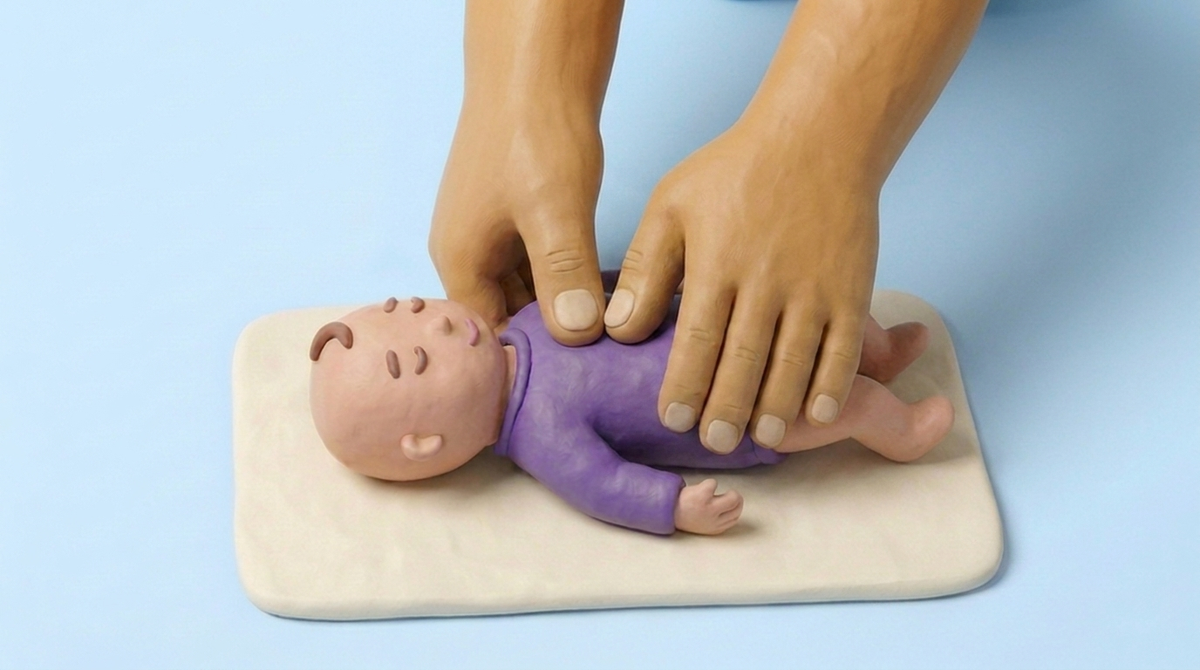
The steps
- Make sure the area is safe. Check whether the child responds by calling their name and gently tapping their shoulder. Check for normal breathing for no more than 10 seconds.
- Call for help: if the child is unresponsive and not breathing normally, ask someone to call 998, put the phone on speaker, and bring an AED. If you are alone, call 998 on speaker and follow the dispatcher's instructions.
- Give 5 rescue breaths: gently tilt the head back and lift the chin. For an infant, cover both the mouth and nose with your mouth. For an older child, pinch the nose and breathe into the mouth. Give only enough air to make the chest rise.
- Start chest compressions — child (over 1 year): place one or two hands in the centre of the chest and press down about 5 cm.
- Infant (under 1 year): use both thumbs only in the centre of the chest, just below the nipple line, and press down about 4 cm.
- Continue CPR: 30 chest compressions followed by 2 rescue breaths, at a rate of 100–120 compressions per minute. Allow the chest to rise fully after each compression and keep pauses as short as possible.
- Use an AED as soon as it arrives. Follow its voice instructions and continue CPR until the child starts breathing normally, the ambulance team takes over, or you are unable to continue.
Why start with rescue breaths in children?
Because cardiac arrest in children usually starts with a breathing problem and lack of oxygen — the first 5 breaths restore the oxygen the heart and brain need. If you cannot give breaths, continuous chest compressions are still far better than nothing.
 Common mistakes
- Fearing to push hard — a child's chest is flexible, and effective compressions are what save them.
- Shaking an infant violently to wake them.
- Wasting time searching for a pulse — unresponsive and not breathing normally means start.
For parents
Most causes of child cardiac arrest are preventable: watch the pool, keep small objects from infants, and put babies to sleep on their backs. Prevention is CPR done in advance.
This content is for general health education only and is not medical advice. Always seek guidance from a qualified healthcare professional. In an emergency, call 998.