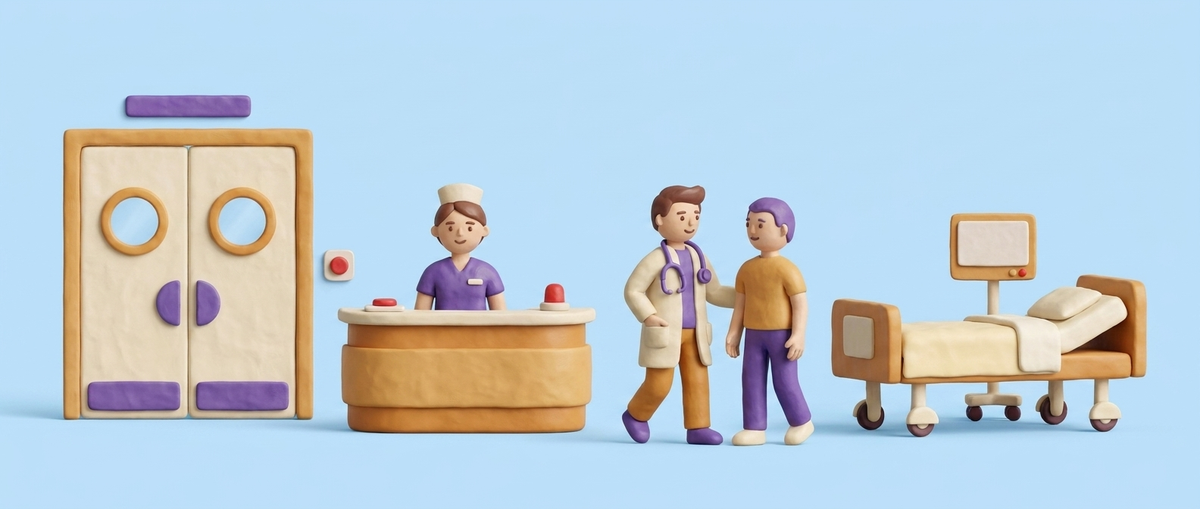
Not all hospitals carry identical capabilities: urgent cardiac catheterisation, neurosurgery, major burns, and neonatal intensive care are concentrated in specific centres. Transfer is a treatment decision whose goal is getting you to the most suitable service.
In short — what to do
- Your condition is stabilised first: airway, blood pressure, bleeding — an unstable patient is moved only out of absolute necessity.
- Your doctor speaks with the receiving hospital, which accepts you before you move.
- A medical report, your test results and imaging travel with you.
- You are moved in an equipped ambulance with a crew matched to your condition's severity.
This topic’s video is coming soon on our channels — follow us
@lahzaem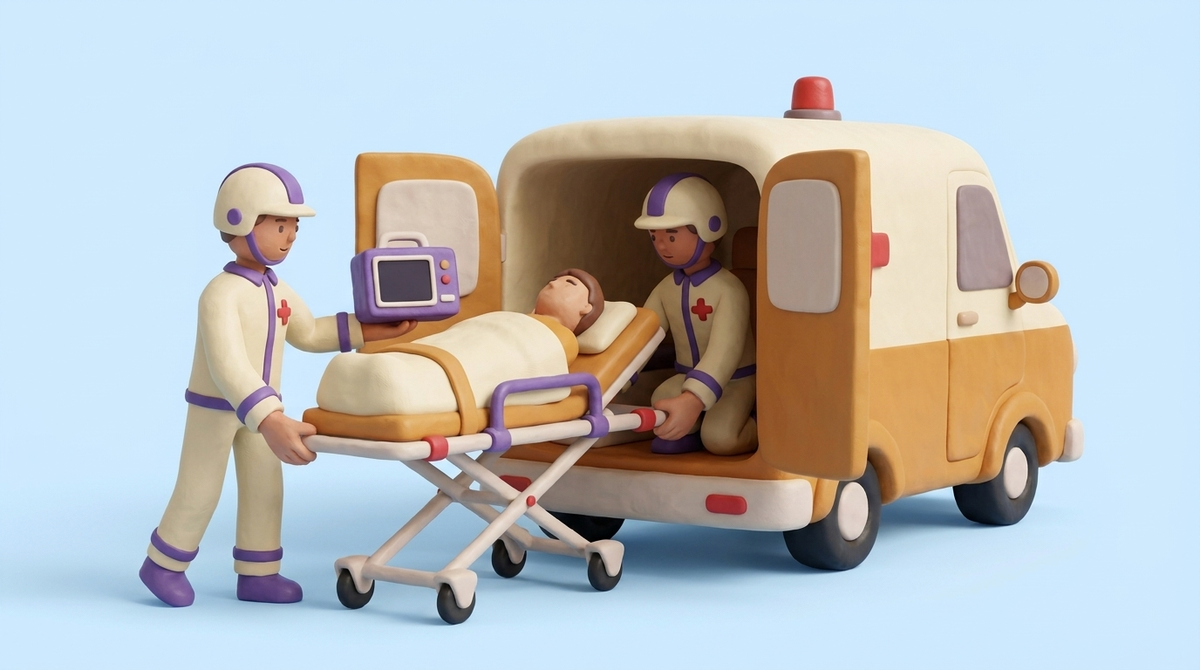
The full details
How a safe transfer works
- Your condition is stabilised first: airway, blood pressure, bleeding — an unstable patient is moved only out of absolute necessity.
- Your doctor speaks with the receiving hospital, which accepts you before you move.
- A medical report, your test results and imaging travel with you.
- You are moved in an equipped ambulance with a crew matched to your condition's severity.
What you and your family can do
- Ask: "where to? why? who informed my family?" — answers you are entitled to.
- Send the patient's medicines, allergy list and ID with them.
- One calm accompanying person is better than ten anxious ones.
 Be careful
- Refusing transfer to a specialised centre in time-critical conditions — strokes, major bleeding — can cost what cannot be recovered. Ask and understand, but do not delay.
Worth knowing
The ambulance is not "just a ride" — it carries monitoring, medicines and a crew that starts treatment on the way. Moving a critical patient by private car is a dangerous decision however faster it seems.
This content is for general health education only and is not medical advice. Always seek guidance from a qualified healthcare professional. In an emergency, call 998.